
For the longest time, designing advanced materials required a significant amount of patience. While professionals in other creative and scientific fields can see the results of their work right before their eyes, material engineers always had to wait for their designs to be manufactured and then tested to see if a new material’s performance would meet expectations.
However, several recent emerging technologies are now letting material engineers more freely tinker and iterate to see results from their work much more rapidly. As a result, designers and engineering teams developing advanced materials are becoming able to test out more ideas and discover more solutions to pressing problems, faster than ever.
The rise of machine learning (ML) and artificial intelligence (AI), in this regard, is probably the single most significant development in the field of advanced materials design over the past decade. ML algorithms are making the material design much more intuitive than before. They are letting material engineers make a design change and get immediate feedback about how that new material performs.
Meanwhile, AI is helping designers make discoveries that lead to design changes for materials. As humans, we can observe natural phenomena, develop mathematical models to explain them, and eventually try to replicate them in the materials design process. But AI tools are essentially eliminating the intermediary step and uncover physical laws and solve problems without ever having to work out the equations. This technology is revolutionizing sectors like biology and medicine, and it will have an increasingly significant impact on the materials design field in the coming years.
Finally, the growth of high-fidelity, micro-level 3D printing is putting the “materials” in “materials design.” Rather than waiting weeks to see designs brought to life via manufacturers’ prototypes, engineers can use 3D printers from their labs (or, depending on their budget, even from their basements) and see real-world results of their efforts in nearly real-time.
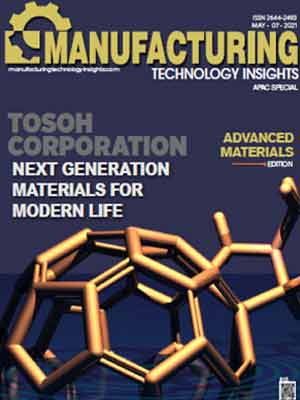
At this juncture, there is a variety of advanced materials solution providers are available in the market that caters to the different business use cases. To help organizations choose the advanced materials solution provider that best fits their requirement, Manufacturing Technology Insights has compiled a list of the top 10 advanced materials solution providers. Besides, the magazine also comprises insights from thought leaders in the sector on the industry trends, best practices, recent innovations, and their advice for aspiring CIOs.
We present to you Manufacturing Technology Insights’, “Top 10 Advanced Materials Solution Providers in APAC – 2021.”










![Oerlikon [SIX: OERL]](https://www.manufacturingtechnologyinsights.com/company_logos/mhgx822272qqq.jpg "Oerlikon [SIX: OERL] - Top Advanced Materials Solution Companies in APAC")